

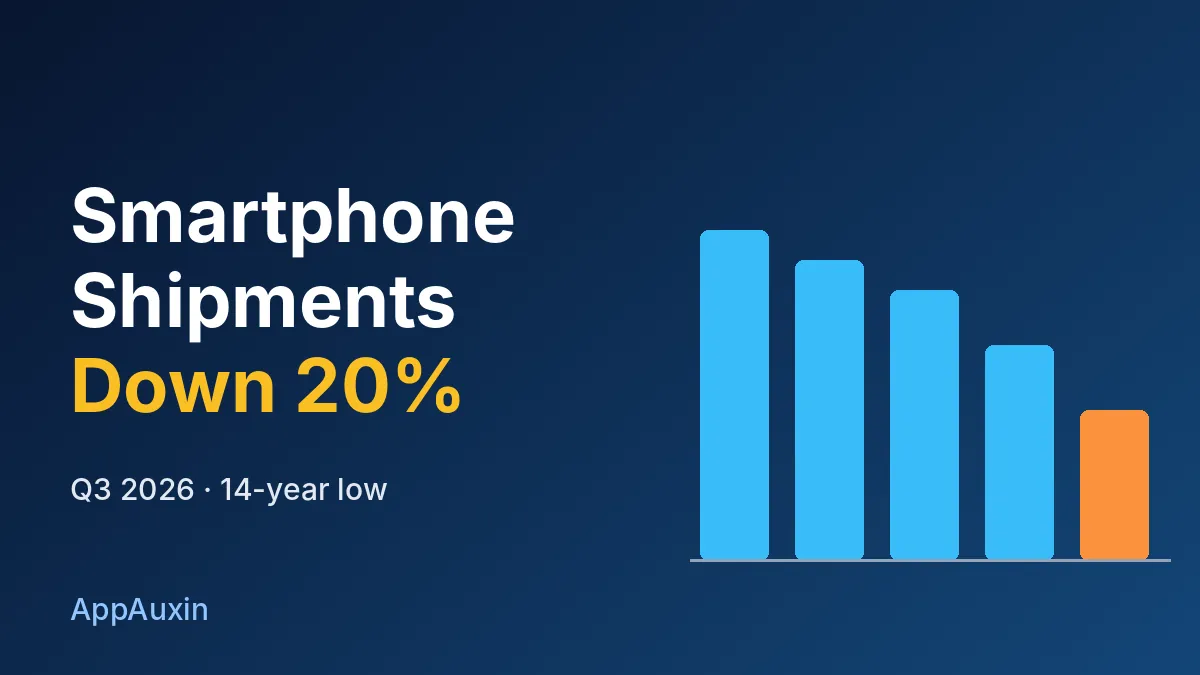
Smartphone shipments Q3 2026 came in 20% lower than a year ago, the weakest third quarter in 14 years, according to Counterpoint Research. The cause is a memory shortage that is making phones more expensive to build. For you, that means higher prices and fewer cheap options.
Here are the numbers that matter before you plan a phone purchase.
- Global shipments fell 20% year over year in Q3 2026 (Counterpoint, preliminary data).
- Average retail phone prices are up 20% so far this year.
- Samsung leads with 23% share; Apple is second with 22%.
- Xiaomi, OPPO and vivo saw the sharpest drops, each down more than 20%.
Those four facts explain most of what you will see in stores this fall. The rest of this post covers who got hit, why, and how to shop around it.
Why smartphone shipments fell off a cliff
Memory chips are the culprit. Prices for DRAM and NAND have climbed because AI data centers are soaking up supply. Phone makers buy the same kinds of chips, so their costs jumped too.
Counterpoint says brands responded by changing prices, production and product plans, according to ChannelNews. Some built fewer phones. Others raised prices and accepted lower sales.
If this sounds familiar, it is the same squeeze that hit laptops and PCs. We broke down that side of it in our guide to the RAM price crisis and whether to buy or wait.
Who lost the most, and who held steady
Cheaper phone brands took the hardest hit. They run on thin margins, so rising chip costs leave them little room. Samsung and Apple, with bigger budgets and premium models, held up better.
| Brand | Q3 market share | Shipments vs last year |
|---|---|---|
| Samsung | 23% | Down 3% |
| Apple | 22% | Down (exact figure not given) |
| Xiaomi | 10% | Down more than 30% |
| OPPO (incl. OnePlus, realme) | 9% | Down more than 20% |
| vivo | 8% | Down more than 20% |
Samsung kept the top spot and gained the most share among major brands. Apple passed 20% share in a third quarter for the first time, which Counterpoint partly links to there being no base iPhone 18 in the quarter, per Business Today.
The takeaway: a smaller drop does not mean a healthy market. It means the big names are better cushioned.
What this means for your next phone price
Budget and mid-range phones will feel it most. Counterpoint reports that Xiaomi, OPPO and vivo have already raised prices on entry-level and mid-range models. It expects more increases and limited availability ahead.
Makers are also expected to chase profit over volume. That usually means fewer models in the lineup and a bigger push toward premium phones.
Flagship prices are moving too. If you are eyeing a Samsung, our look at the Galaxy S26 price increase in the US shows how that plays out.
How to buy a phone while chip costs stay high
You cannot fix the shortage, but you can shop around it. These are the moves that make the most sense right now.
- Keep your current phone another year if the battery and updates are still fine.
- Consider a refurbished model; refurbished Pixel 9 prices show how much you can save.
- Buy the storage you need, not the biggest tier, since memory is exactly what costs more.
- Watch carrier and retailer trade-in deals, which can cancel out a price hike.
- Check how long the phone will get updates before you pay, because a cheap phone with two years of support costs more in the end.
Counterpoint also says shoppers are already holding phones longer and weighing refurbished devices, so you would not be alone.
How to read these numbers
Counterpoint’s figures are preliminary and measured on a sell-in basis. That means phones shipped to retailers and carriers, not phones bought by shoppers. The two usually move together, but they are not the same thing.
A 20% drop also does not mean 20% fewer people got a phone. Some of it is makers shipping less stock on purpose, and some is people keeping their old phones longer. Both effects point the same way: tighter supply and fewer bargains.
Counterpoint’s note that average retail prices are up 20% this year is the number you will feel most. It is a global average, so your local prices may differ.
Frequently Asked Questions
Why did smartphone shipments drop 20% in Q3 2026?
Counterpoint Research blames a memory shortage. Higher DRAM and NAND costs made phones pricier to build, so makers raised prices and cut production.
Will phone prices keep going up?
Counterpoint expects more increases on budget and mid-range phones, and says conditions are unlikely to improve until memory costs and supply do. Nobody can say exactly when that will be.
Which brand is the biggest smartphone seller right now?
Samsung, with 23% of Q3 shipments, ahead of Apple at 22%. Xiaomi, OPPO and vivo follow at 10%, 9% and 8%.
Is it better to buy a refurbished phone now?
It can be, especially on the mid-range, where new prices are rising fastest. Buy from a seller with a clear warranty and return policy.
Should you buy now or wait?
If your phone works, wait and let the price pressure show its hand. If it is dying or no longer gets security updates, buy now rather than gambling on relief that analysts do not promise. In both cases, skip the pricier storage tier and look hard at a refurbished flagship before paying full price for a new mid-ranger.
Leave a Reply